
Kitten Breathing Fast: 30 Breaths a Minute, Sleep Twitches and Red Flags
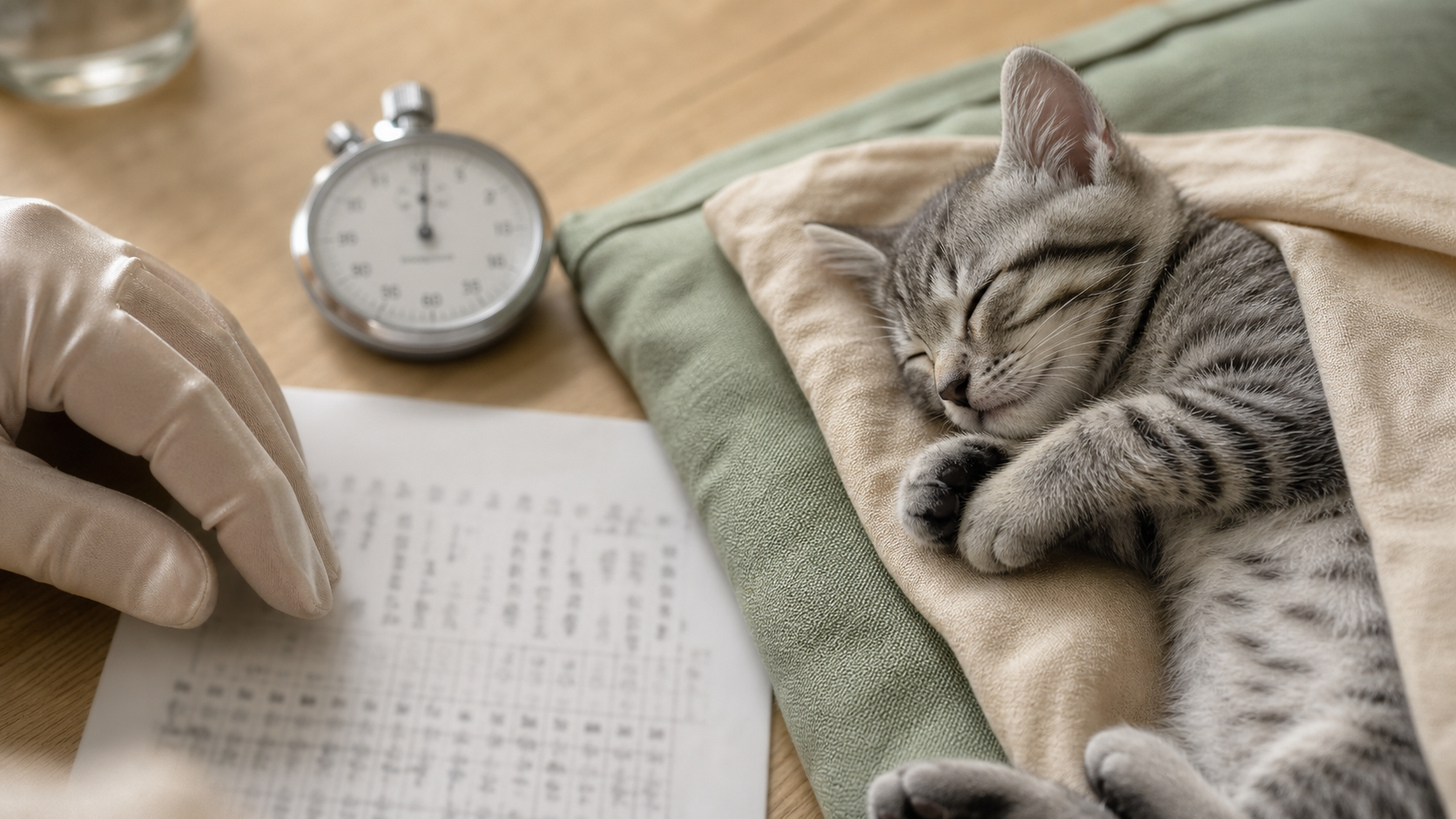
If your kitten is breathing fast, start with the situation: is it asleep, warm, stressed after play, or lying still and struggling? A kitten can breathe a little faster than an adult cat, but rapid breathing at rest can also be an early sign of pain, fever, infection, heart trouble, or respiratory distress. The safest approach is simple: count the breaths, check for warning signs, and call a veterinarian urgently if anything looks abnormal.
What counts as normal breathing for a kitten?
A healthy kitten at rest usually breathes in a quiet, regular rhythm. Many adult cats breathe around 10 to 30 times per minute when calm, while kittens may sit toward the higher end because they are growing quickly and have a higher metabolic rate. As a practical home benchmark, 20 to 30 breaths per minute at rest is generally reassuring. Some relaxed kittens may be slightly above this, but a repeated reading above 30 to 35 at true rest deserves attention.
Identify Respiratory Disease Symptoms in Animals : A comprehensive guide detailing common clinical signs of respiratory issues in animals, including coughing, sneezing, and nasal discharge.
Measure only when your kitten is calm
Respiratory rate is only useful if you measure it when your kitten is resting, sleepy, or quietly lying down. Do not count immediately after running, wrestling, eating, being handled, crying in a carrier, or sitting in a hot room. Those situations can temporarily raise breathing rate without meaning your kitten is ill.
To count, watch the chest or flank rise and fall. One rise and one fall equals one breath. Count for 30 seconds and multiply by two, or count for a full minute if the rhythm is irregular. Try not to touch your kitten while counting, because petting or waking it may change the result.
| Situation | What it may mean | What to do |
|---|---|---|
| 20 to 30 breaths per minute, relaxed | Often normal | Keep observing |
| 30 to 35 at rest, repeated | Borderline or early concern | Recheck and contact your vet if it persists |
| Over 40 at rest | Potentially abnormal | Call a veterinarian promptly |
| Fast breathing with open mouth, blue gums, collapse, or severe lethargy | Emergency signs | Seek urgent veterinary care now |
Fast breathing during sleep is often different
Many owners notice fast breathing when a kitten is asleep because the body is finally still enough to watch closely. During dream sleep, a kitten may twitch, make tiny noises, move its whiskers, flick its paws, and breathe faster for short bursts. If the breathing slows again, the kitten wakes normally, and the gums look pink, this can be a normal sleep pattern.
Dreaming, growth and tiny bodies
Kittens spend a lot of time sleeping, and their sleep can look surprisingly active. Short episodes of quicker breathing may happen during REM sleep, when the brain is active and the body may show small movements. Young animals also have less reserve than adults, so their breathing may look more noticeable, especially if they are curled up tightly or lying on one side.
In a tiny kitten, small changes can be easy to see. A dream twitch, a warm blanket, a full belly, or a curled sleeping posture can make the flank rise more visibly, even when nothing serious is happening. The useful detail is not one isolated moment, but the pattern that follows it. Does the rhythm smooth out when the dream passes? Does the chest move easily? Does your kitten settle back into quiet sleep? The overall pattern is more helpful than one dramatic burst of movement.
When sleep breathing is not reassuring
Fast breathing during sleep is more concerning if it continues for several minutes, happens every time your kitten rests, or comes with effort. Watch for the abdomen pumping, nostrils flaring, the neck stretched forward, or the chest pulling in sharply between the ribs. These signs suggest the kitten is working harder to breathe, not merely dreaming.
Warning signs that mean you should call a vet urgently
Rapid breathing is not a diagnosis. It is a sign. What matters most is whether your kitten is moving air comfortably and getting enough oxygen. If you see any of the signs below, do not wait to see if it improves on its own.
- Open-mouth breathing or panting when not just briefly overheated or stressed.
- Blue, gray, very pale, or muddy gums, which can suggest poor oxygenation or circulation.
- Severe lethargy, weakness, collapse, or inability to stand normally.
- Labored breathing, including belly heaving, neck extended, elbows held away from the body, or visible effort.
- Coughing, wheezing, noisy breathing, choking sounds, or repeated gagging.
- Refusing food, especially in a very young kitten, or seeming too weak to nurse or eat.
- Fever, dehydration, vomiting, diarrhea, or signs of pain such as hiding and crying when handled.
- Trauma, a fall, being stepped on, possible toxin exposure, or suspected ingestion of a foreign object.
If your kitten is struggling to breathe, keep handling to a minimum. Place it in a secure carrier, keep the environment quiet and not overheated, and go to an emergency veterinary clinic or call ahead while someone else drives. Do not force food, water, medication, or home remedies into a kitten that is breathing hard.
Common reasons a kitten may breathe fast
Some causes are temporary and harmless; others need prompt treatment. You cannot reliably diagnose the cause at home, but understanding the possibilities helps you decide how quickly to act and what details to tell the veterinarian.
Heat, play, stress and excitement
After intense play, a car ride, a bath, or a frightening event, a kitten’s breathing may speed up. This should settle as the kitten calms down in a cool, quiet place. If the breathing remains fast at rest, becomes noisy, or comes with weakness, it is no longer safe to assume it is only stress.
Respiratory infections and congestion
Kittens are vulnerable to upper respiratory infections. Sneezing, runny eyes, nasal discharge, reduced appetite, fever, and noisy breathing can all make a kitten breathe faster. A blocked nose is especially difficult for a young kitten, because eating and breathing compete for energy. Veterinary care is important if the kitten is not eating, seems dehydrated, or has thick nasal discharge.
Pain, fever, dehydration or internal illness
Pain can raise breathing rate even when the lungs are healthy. Fever and dehydration can do the same because the body is under stress. A kitten with diarrhea, vomiting, poor appetite, a swollen belly, or sudden hiding behavior may breathe fast as part of a broader illness. Small kittens can deteriorate quickly, so these signs should be taken seriously.
Heart or lung conditions
Less commonly, rapid breathing may relate to asthma-like airway disease, fluid around the lungs, pneumonia, congenital heart disease, or other cardiopulmonary problems. Certain inherited conditions can appear early in life, and a kitten may look normal until its body can no longer compensate. Persistent fast breathing at rest is one of the signs a veterinarian will want to investigate.
What to do now: a simple decision path
When you are worried, avoid guessing from a single glance. Use a calm, repeatable process unless your kitten is clearly in distress. If breathing looks difficult, urgent care comes first.
- Count the breathing rate at rest. Wait until your kitten is lying quietly or asleep. Count chest movements for 30 seconds and double the number.
- Look at effort, color and behavior. Pink gums, normal posture, normal appetite, and playful behavior are reassuring. Open-mouth breathing, blue or pale gums, collapse, weakness, or labored movement are urgent signs.
- Repeat once if the kitten seems stable. If the second resting count is still high, especially above 30 to 35, contact your veterinarian for advice.
- Prepare useful information. Note the breathing rate, how long it has been happening, whether it occurs during sleep only, appetite, energy level, gum color, coughing, sneezing, vomiting, diarrhea, and any recent stress or injury.
- Do not delay for severe signs. A kitten breathing with effort needs veterinary assessment, and oxygen support or treatment may be time-sensitive.
In many cases, a kitten breathing fast during a dream or after play is not an emergency. But fast breathing at true rest, repeated high counts, or any sign of effort should be treated cautiously. If you are unsure, a quick call to your veterinarian or an emergency clinic is the safest next step. With kittens, early advice is far better than waiting until breathing becomes visibly difficult.

Articles qui pourraient vous intéresser :
 Rigidité cadavérique du chat : les 4 étapes clés entre 30 minutes et 48 heures
 Suivi du poids du chaton : 10 grammes par jour pour garantir une croissance saine
 Mon chat me suit partout : simple signe d’affection ou dépendance comportementale ?
 Chat tout mignon : 4 races irrésistibles et les secrets de leur succès