
Australian Shepherd Corgi: Short Legs, Sharp Mind and the Doubts to Settle Before Adoption
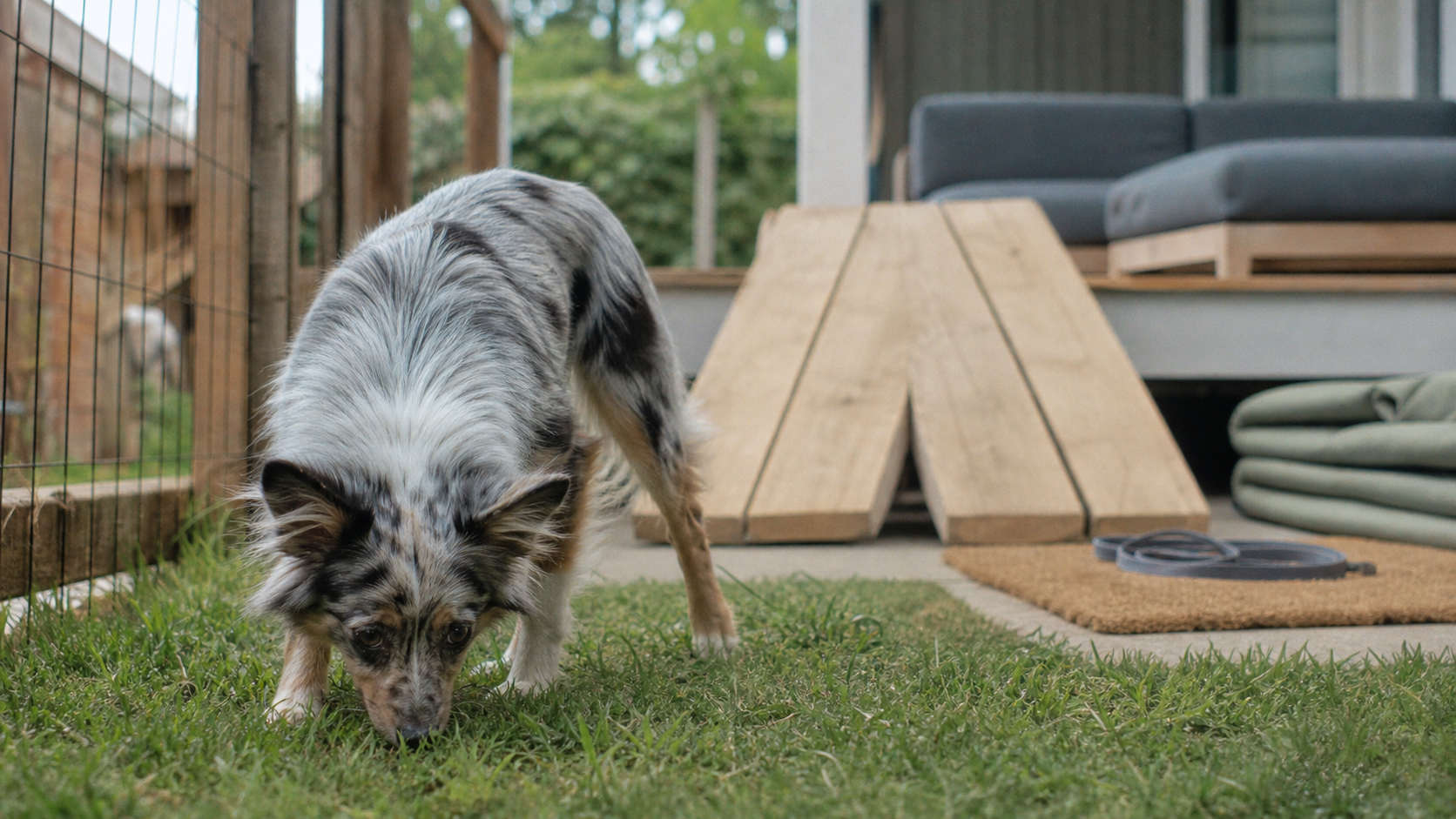
The Australian Shepherd Corgi mix, often called an Auggie, looks like a small herding dog with a big personality: compact body, expressive face, sometimes a merle coat, sometimes Corgi-like ears, and often far more energy than its size suggests. Before falling for the photos, the real question is whether you can live with a clever working dog in a low-to-the-ground package.
This cross is not a recognized pure breed with a predictable standard. It is usually a mix between an Australian Shepherd and a Welsh Corgi, most often a Pembroke Welsh Corgi, though Cardigan Corgi mixes also exist. That means appearance, temperament and health risks can vary widely from one dog to another.
What an Australian Shepherd Corgi mix really is
An Auggie, Augi, Auggi, Augie or Aussie-Corgi is a cross between two herding breeds. The Australian Shepherd brings athleticism, intense focus and a strong desire to work with people. The Corgi brings boldness, cattle-driving instincts, a sturdy body and, often, short legs caused by a form of dwarfism known as achondroplasia.
Official Canine Health Screening Guidelines by Breed : Access the definitive list of recommended health tests and screenings for specific dog breeds to ensure responsible breeding and pet wellness.
Size, coat and the “surprise factor”
Because Australian Shepherds can be standard, miniature or toy-sized, the adult size of an Australian Shepherd Corgi mix can be difficult to predict. A puppy from a Toy Australian Shepherd parent may stay quite small, while one from a standard Aussie parent can become a medium, powerful dog on short legs. Some owner stories mention very small puppies, such as 10 to 12 pounds at around 6 months, but that should not be treated as a guarantee.
Coats are just as variable. You may see blue merle, red merle, black tricolor, red and white, sable tones, white markings, tan points, heterochromia or a long Corgi-like body with an Aussie-style face. Most have a double coat with guard hair and undercoat, which means regular shedding rather than a low-maintenance “cute small dog” grooming routine.
| Parent influence | Possible effect in an Auggie | What it means for owners |
|---|---|---|
| Pembroke Welsh Corgi | Short legs, bold temperament, strong heel-nipping instinct | Protect the back, manage jumping, train polite movement around children |
| Cardigan Welsh Corgi | Slightly larger frame, often a longer tail, sturdy build | Expect a heavier, more robust variation than the classic Pembroke look |
| Standard Australian Shepherd | Higher athletic drive, more size, intense focus | Best for active homes ready for training, sports or structured work |
| Mini or Toy Australian Shepherd | Smaller size, still mentally busy and reactive if under-stimulated | Do not assume small means easy or calm |
Temperament: brilliant, loyal and not always easy
The appeal of the Australian Shepherd Corgi mix is real. Many are affectionate, funny, people-oriented and quick to learn. They can develop a strong bond with their family and often enjoy training when rewards, movement and clear rules are involved. But both parent breeds were developed to control livestock, not to lounge quietly all day without a job.
Herding instinct in family life
The classic challenge is herding behavior directed at people, children, cats, bicycles or running dogs. This may show up as chasing, barking, circling or nipping at heels. It is not “bad attitude” in the human sense; it is an inherited motor pattern. Still, it must be redirected early because it can frighten children and create conflict with other pets.
Good outlets include recall games, scent work, trick training, agility foundations, controlled fetch, impulse-control exercises and supervised play with compatible dogs. Punishing the instinct without offering an alternative often increases frustration. The goal is to teach the dog what to do instead: come to you, carry a toy, settle on a mat, follow a cue, or disengage from fast movement.
Is it a good first dog?
For many first-time owners, this is not the easiest choice. An Auggie can be a wonderful companion, but only if the household is ready for daily activity, consistent education and mental enrichment. A sedentary family, a person away from home for long workdays, or someone hoping for a calm apartment dog may struggle.
That does not make apartment life impossible. It means the dog’s day must be designed. Short toilet walks are not enough. A realistic routine includes brisk walks, training sessions, puzzle feeding, safe chewing, social exposure and calm rest. Without that structure, barking, destruction and obsessive chasing can appear quickly.
Health and care: the cute shape has consequences
Mixed dogs can be healthy, but crossing two breeds does not automatically erase genetic risk. An Australian Shepherd Corgi mix may inherit concerns from either side, and a responsible owner should think beyond coat color and eye color.
Back, hips, eyes and the merle question
The Corgi body type is linked to a long back and short legs, which can increase concern around intervertebral disc disease, especially if the dog jumps frequently from sofas, beds or cars. Keeping the dog lean, using ramps when useful, building strong muscles gradually and avoiding repeated high-impact jumping can help reduce strain.
From the Australian Shepherd side, owners should be aware of hip and elbow dysplasia, progressive retinal atrophy, collie eye anomaly and sensitivity related to the MDR1 gene mutation in some herding breeds. Merle coloring also deserves caution: breeding two merle dogs together can increase the risk of serious hearing and vision problems. A good breeder should be able to discuss these issues plainly and provide health testing, not just pretty photos.
Daily maintenance and lifespan
Auggies are often expected to live around 12 to 15 years, but longevity depends on genetics, weight management, veterinary care and lifestyle. Brushing several times a week is realistic for many double-coated dogs, with heavier shedding during seasonal coat changes. Bathing should be occasional and appropriate; the main work is removing loose undercoat and checking ears, nails, teeth and skin.
Think of training and care like a scaffold around a growing building. The dog’s instincts are the structure, but your routines are the temporary supports that keep everything aligned while habits set: a morning walk before work, a chew after meals, a mat cue when guests arrive, ramps near furniture, nail trims paired with rewards, and calm handling after play. Owners often wait for a problem to appear before adding support; with this mix, the smarter approach is to build the supports first, then let the dog grow into them.
Buying or adopting: price, ethics and where to look
The Australian Shepherd Corgi mix sits in the “designer dog” category, which makes ethics especially important. Some people breed these puppies carefully, but many produce them mainly because the look sells: short legs, merle coat, blue eyes and a catchy name. A high price does not prove quality.
What a puppy may cost
In many private-breeder contexts, an Auggie puppy may cost around $1000 or more. The purchase price is only the beginning. Budget for vaccinations, parasite prevention, food, training classes, grooming tools, insurance or emergency savings, spay or neuter discussions with your veterinarian, and possible orthopedic or eye evaluations if concerns appear.
Be cautious if a seller cannot show the parents, avoids health questions, always has puppies available, sells mainly through urgency, or promotes rare colors more than temperament and testing. For parent breeds, relevant screening may include hip and elbow evaluation, eye exams and genetic tests such as MDR1 where appropriate. For a cross, there is no official breed standard to protect you, so your questions matter even more.
Why rescue may be the best route
Many people meet their Auggie through a shelter, rescue or rehoming situation rather than a planned breeder. This can be an excellent option, especially if the dog is already old enough for staff or foster families to describe its real personality. Corgi rescues, Australian Shepherd rescues, local shelters and herding-dog rescue networks are all worth checking.
If you already own a rescue dog that looks like an Aussie-Corgi, a DNA test can help clarify ancestry, but behavior should guide your daily choices more than the label. Whether the result says Pembroke, Cardigan, Mini Aussie or a dozen other breeds, your dog still needs the same practical assessment: energy level, sociability, body shape, fears, food motivation and response to training.
Who this mix suits, and who should think twice
The ideal home for an Australian Shepherd Corgi mix is active, patient and interested in training as a lifestyle, not a one-time puppy class. This dog can suit adults who hike, jog moderately, practice dog sports, enjoy trick training or want a compact companion with working-dog intelligence.
Families with children can succeed when adults supervise carefully and teach both sides: children should not run screaming around the dog, and the dog should learn calm behaviors around movement. Homes with cats may work if introductions are slow and the dog’s chasing instinct is managed from the start. A secure yard helps, but it does not replace walks, learning and human engagement.
You should think twice if you want a low-shedding dog, a quiet couch companion, a pet that can be left alone all day without preparation, or a puppy chosen mainly for merle coloring and blue eyes. You should also pause if no one in the household is willing to handle barking, training repetition, grooming and veterinary planning.
At its best, the Auggie is a bright, comical, deeply engaged companion. At its worst, it is an under-employed herding dog with back-risk anatomy and too little structure. The difference is rarely the name of the mix; it is the match between the dog’s needs and the life you can honestly provide.

Articles qui pourraient vous intéresser :
 Nano-aquarium : 4 poissons de moins de 3 cm et les paramètres d’eau pour réussir
 Collier de rappel pour chien : 3 clés pour lâcher la laisse sans risquer la fugue
 Chat noir : 4 vérités génétiques pour briser les superstitions tenaces
 Sexage des chatons : 1 cm de distance et 3 repères visuels pour identifier le sexe sans erreur